
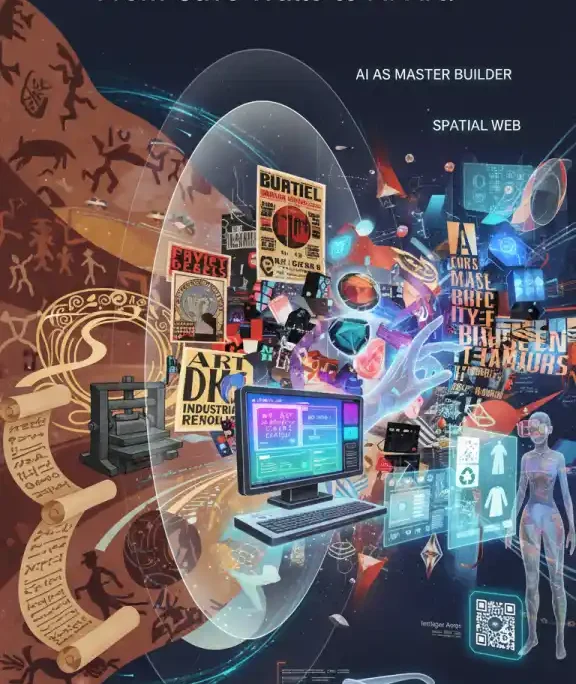
Beyond Pixels: Unpacking
Graphic Design’s
Wild Ride
Graphic design is no longer just about visuals — it’s about experience,
storytelling, psychology, and technology coming together to shape how
we interact with the world.
Introduction
Graphic design has evolved far beyond static images and printed layouts.
What once revolved around typography, grids, and color theory now
includes motion, interaction, artificial intelligence, and immersive
experiences.
In this article, we explore the evolution of graphic design, the forces
shaping its future, and how designers can adapt to stay relevant in an
ever-changing digital landscape.
The Early Days of Graphic Design
Graphic design began as a craft rooted in print. Designers focused on
balance, readability, and hierarchy using physical tools such as ink,
paper, and printing presses.
Posters, magazines, and brand identities relied heavily on composition
and manual precision. Every decision was intentional — mistakes were
costly, and revisions took time.
The Digital Revolution
The rise of computers and design software transformed the industry.
Tools like Photoshop and Illustrator gave designers unprecedented
flexibility and speed.
Design became more experimental. Layers, effects, and digital typography
opened doors to creativity that were previously impossible.
UX, UI, and Human-Centered Design
As digital products grew, graphic design expanded into user experience
(UX) and user interface (UI) design. Visuals were no longer just
decorative — they became functional.
Designers now consider user behavior, accessibility, usability, and
emotional response as core components of the design process.
Motion, Interaction, and Immersion
Motion design, micro-interactions, and animations add life to digital
interfaces. Small details like hover effects and transitions create
smoother, more engaging experiences.
Today’s graphic design often lives in motion — on websites, apps, and
even virtual environments.
The Role of AI in Graphic Design
Artificial intelligence is reshaping how designers work. From layout
suggestions to image generation, AI tools accelerate workflows and
expand creative possibilities.
Rather than replacing designers, AI acts as a creative partner — helping
ideas move from concept to execution faster than ever.
The Future of Graphic Design
The future of graphic design lies at the intersection of technology,
storytelling, and empathy. Designers who understand both visuals and
systems will lead the next generation of digital experiences.
Adaptability, curiosity, and continuous learning are no longer optional
— they are essential.
Conclusion
Graphic design has moved beyond pixels. It is now a multidimensional
discipline that shapes how people feel, think, and interact with
technology.
As tools and platforms evolve, one thing remains constant: great design
starts with understanding people.